Colonel John Boyd
Fighter pilot. Military strategist. Iconoclast.
A public digital archive preserving the work and legacy of one of the most influential military theorists of the 20th century.
About This Archive
This site catalogs resources about Colonel John Boyd and his work. Its goal is to serve as a public, long-term digital archive for these resources.
John Boyd (1927–1997) was a United States Air Force fighter pilot and Pentagon consultant known for his theories on military strategy, especially the OODA loop concept. His ideas have influenced military strategy, business theory, and beyond.
Boyd never published a book himself. Instead, he developed and delivered his ideas through a series of briefings—most famously Patterns of Conflict—that he continuously refined over decades. This archive collects those briefings, related papers, videos, and other materials.
Contact
If you have corrections, new materials to add, questions, or suggestions for improving the site, please email coljohnboyd [at] outlook.com.
Acknowledgements
Chet Richards, Ginger Richards, Chuck Spinney
Key Concepts
The OODA Loop
Boyd's most famous concept describes the decision cycle of Observe, Orient, Decide, and Act. The key insight is that the entity that can cycle through this loop faster than their opponent gains an advantage.
The full diagram below shows the complexity Boyd intended—with multiple feedback loops and the central importance of orientation.
Energy-Maneuverability Theory
Boyd's earlier work in the 1960s developed a mathematical framework for comparing fighter aircraft performance. The E-M theory influenced the design of the F-15 and F-16.
This analytical approach—quantifying what had been intuitive—exemplified Boyd's method of rigorous thinking about complex systems.
Destruction and Creation
Boyd's philosophical essay argues that to create new mental models, we must first destroy existing ones. Drawing on Gödel, Heisenberg, and thermodynamics, it provides the epistemological foundation for his strategic thinking.
Read the essay →Maneuver Warfare
Boyd's briefings influenced the U.S. Marine Corps' adoption of maneuver warfare doctrine in the 1980s. The focus shifted from attrition to creating confusion, disorder, and paralysis in the enemy.
Patterns of Conflict remains the most comprehensive expression of these ideas.
The Full OODA Diagram
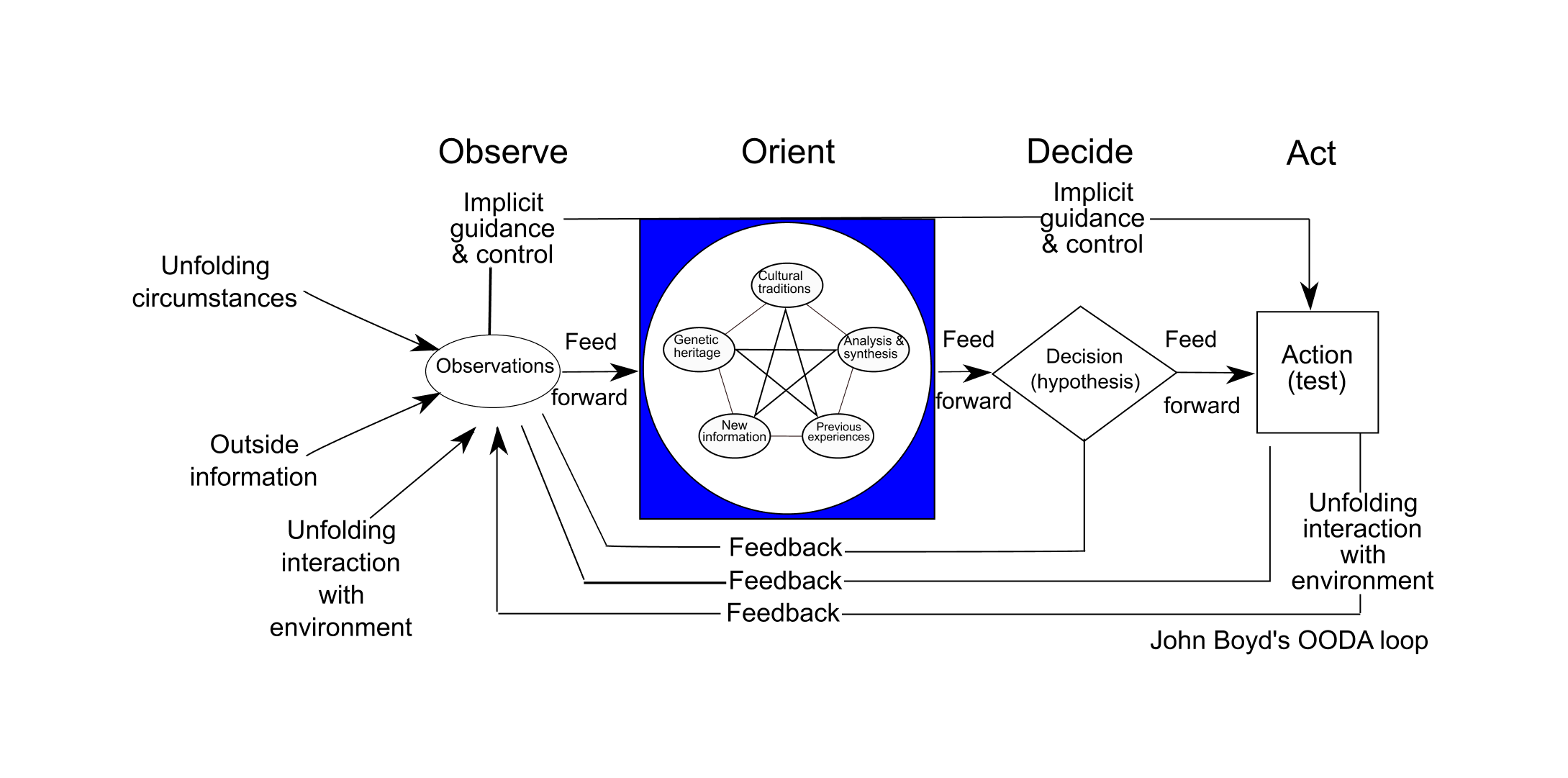
Click to enlarge
John Boyd's OODA Loop (Source: Wikipedia)
Resources & Downloads
Boyd's work is primarily preserved in briefing slides and papers. Below are the key documents available for download and viewing.
1 Boyd's Briefings (The Discourse)
The core collection of Boyd's strategic thinking, culminating in "A Discourse on Winning and Losing."
Aerial Attack Study
John R. Boyd • August 11, 1964 • PDF
Boyd's famous fighter tactics manual from the Fighter Weapons School
A Discourse on Winning and Losing
John R. Boyd (edited by Grant T. Hammond) • March 2018 • PPT as PDF
All the briefings in one document, edited by Grant Hammond
Abstract
John R. Boyd • c. 1987 • PDF
Conceptual Spiral
John R. Boyd • August 1992 • PDF
Conceptual Spiral
John R. Boyd • August 1992 • PPT as PDF
Destruction and Creation
John R. Boyd • September 3, 1976 • PDF
Boyd's philosophical essay on epistemology
The Essence of Winning and Losing
John R. Boyd • June 28, 1995 • PPT as PDF
New Conception for Air-to-Air Combat
John R. Boyd • August 4, 1979 • PDF
Organic Design for Command and Control
John R. Boyd • May 1987 • PDF
Organic Design for Command and Control
John R. Boyd • May 1987 • PPT as PDF
Patterns of Conflict
John R. Boyd • December 1986 • PDF
Patterns of Conflict
John R. Boyd • December 1986 • PPT as PDF
Revelation
John R. Boyd • 1987 • PPT as PDF
The Strategic Game of ? and ?
John R. Boyd • June 1987 • PDF
The Strategic Game of ? and ?
John R. Boyd • June 1987 • PPT as PDF
2 Lectures & Talks
3 Related Papers & Analysis
A New Conception of War: John Boyd, the U.S. Marines, and Maneuver Warfare
Ian T. Brown • 2018 • PDF
Shaping and Adapting: Unlocking the Power of Colonel John Boyd's OODA Loop
Maj. Paul Tremblay Jr., USMC • April 22, 2015 • PDF
Evolutionary Epistemology: A Personal View of John Boyd's "Destruction and Creation"
Franklin C. Spinney • 2019 • PDF
Boyd's OODA Loop
Chet Richards • 2020 • PDF
Necesse, Vol 5, Issue 1, 2020
Video Recordings
Patterns of Conflict Briefing
Video recordings of Boyd delivering his famous briefing. Note: The original recordings have mono sound and low volume.

Patterns of Conflict, Part 2

Patterns of Conflict, Part 3

Patterns of Conflict, Part 4

Patterns of Conflict, Part 5

Patterns of Conflict, Part 6

Patterns of Conflict, Part 7

Patterns of Conflict, Part 8

Patterns of Conflict, Part 9

Patterns of Conflict, Part 10

Patterns of Conflict, Part 12

Patterns of Conflict, Part 13
Other Videos
Brian Lamb interviews Robert Coram about "Boyd: The Fighter Pilot Who Changed the Art of War"
CSPAN · December 19, 2002
Boyd testifies to the House Armed Services Committee on U.S. Military Reform After Operation Desert Storm
CSPAN · April 30, 1991
John Boyd: The Most Important American Strategist You Never Heard Of
JINSA · June 10, 2020
Photo Gallery
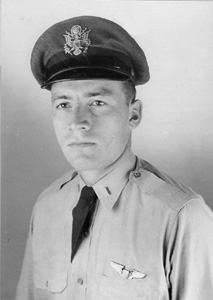
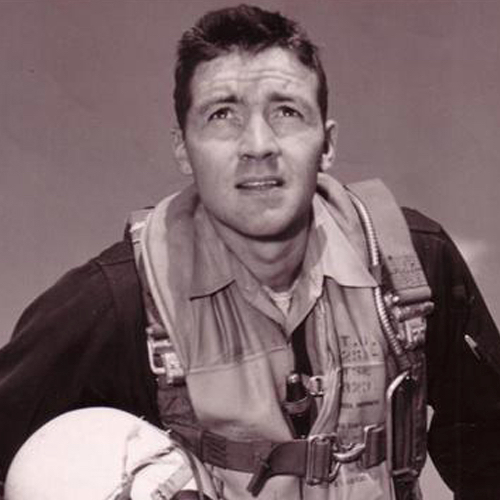
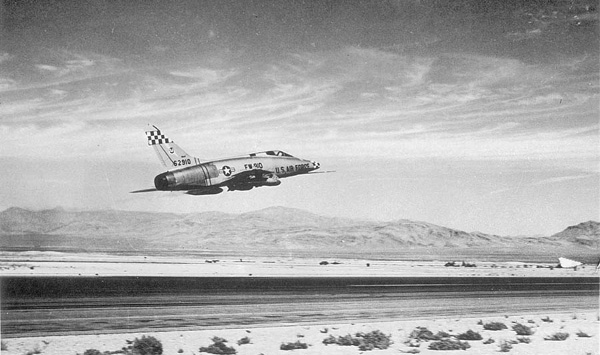
Historical photographs of Colonel John Boyd throughout his career.
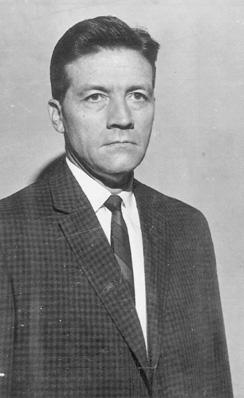
External Links & Resources
Books About Boyd
Airpower Reborn: The Strategic Concepts of John Warden and John Boyd
by John Andreas Olsen (editor) (2015)
Certain to Win: The Strategy of John Boyd, Applied to Business
by Chet Richards (2004)
Control Warfare: Inside the OODA Loop - War College Series
by Michael T. Plehn (2015)
Manipulating the OODA Loop: The Overlooked Role of Information Resource Management in Information Warfare
by Gregory M. Schechtman (2012)
The Mind of War: John Boyd and American Security
by Grant T. Hammond (2001)
A New Conception of War: John Boyd, the U.S. Marines, and Maneuver Warfare
by Ian T. Brown (2018)
Science, Strategy and War: The Strategic Theory of John Boyd
by Frans P.B. Osinga (2007)
A Vision So Noble: John Boyd, the OODA Loop, and America's War on Terror
by Daniel Ford (2013)
Articles, Academic
- Boyd's OODA Loop
Chet Richards — Necesse, Vol 5, Issue 1, 2020
- Shaping and Adapting: Unlocking the power of Colonel John Boyd's OODA Loop
Maj. Paul Tremblay Jr., USMC
- The Wingman-Philosopher of MiG Alley: John Boyd and the OODA Loop
Scott E. McIntosh — Air Power History, Vol. 58, No. 4, 2011
Articles, Popular
Biographies & Profiles
Compendiums
- John Boyd Compendium
Defense and National Interest by the Project on Government Oversight
- Boyd and Military Strategy
Defense and National Interest by the Project on Government Oversight
- Introduction to the Strategic Theories of John Boyd
The Blaster, the blog of Franklin C. (Chuck) Spinney
- List of articles about or deriving from Boyd's work
Chet Richards' site
- www.colonelboyd.com
Another site dedicated to Col. John Boyd
Chet Richards
Franklin C. (Chuck) Spinney
Identifiers
Obituaries & Remembrances
- The Lives They Lived: Col. John R. Boyd; A Fighter on Many Fronts
David H. Hackworth — The New York Times, Jan. 4, 1998
- Col. John Boyd Is Dead at 70; Advanced Air Combat Tactics
Robert Mcg. Thomas Jr. — The New York Times, Mar. 13, 1997
- The Essential Boyd
Grant T. Hammond — Eulogy, March 11, 1997